- October 30, 2026
- Comments: (0)
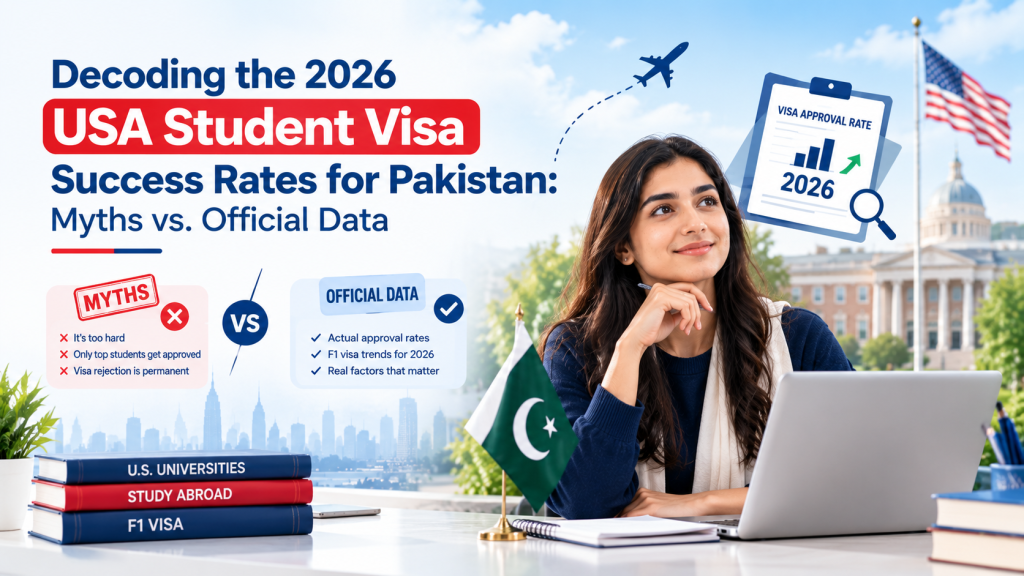
Decoding the 2026 USA Student Visa Success Rates for Pakistan: Myths vs. Official Data
Scroll through any Pakistani study-abroad group and you’ll find someone claiming a “95% success rate” for F1 visas. Scroll a little further and another person swears the real number is “below 20%.” Both can’t be right, and honestly, neither number comes with a source.
So let’s do what most posts skip: look at the actual data. In this guide, you’ll see what the latest US State Department figures say about Pakistan, which popular claims fall apart, and what you can realistically do to improve your own odds.
First, What Does “Success Rate” Actually Mean?
Before we look at any numbers, you need to know how they work. Otherwise, even accurate statistics will mislead you.
Refusal Rate vs. Approval Rate
The US government doesn’t talk about “success rates.” It tracks refusals. If a country has a 70% refusal rate, the approval side is roughly 30%. Same data, flipped.
Applications Aren’t the Same as Students
Refusal figures generally count applications, not individual people. A student who gets refused in March and approved in August with a stronger file can show up in both columns. So a national percentage describes the overall system, not your personal chances.
The Latest Data Covers 2025, Not 2026
Here’s something worth saying plainly: nobody has published full-year 2026 refusal figures yet. The most recent detailed numbers cover 2025 and came out in April 2026. When you see an article claiming “2026 success rates,” it’s either projecting, estimating, or using 2025 data. We’re using the 2025 data, and we’re telling you so.
Where Does the Official Data Come From?
The State Department doesn’t routinely publish F-1 refusal rates broken down by nationality. The figures we have came through a public information request.
The Shorelight “Beyond the Interview” Report
In April 2026, education company Shorelight released a report called Beyond the Interview: A Decade of Student Visa Denials. It builds on annual data the organization obtained from the US Department of State, with support from the Presidents’ Alliance on Higher Education and Immigration. ICEF Monitor analyzed the findings, and you can read the original on the Shorelight website.
Why This Source Matters
It’s derived from government records rather than agent estimates, forum polls, or WhatsApp screenshots. That makes it a far better starting point than anything you’ll find in a group chat.
What the Numbers Say About Pakistan
Let’s get to the part you came for. The data paints a tough picture, and we’d rather you hear it from us than discover it at the embassy.
Pakistan’s F-1 Refusal Rate
According to the report, Pakistani students faced a 71% F-1 refusal rate in 2025, and ICEF notes that the trend intensified compared to the previous year. Put simply, refusals outnumbered approvals.
How Pakistan Compares
| Country / Region | F-1 Refusal Rate (2025) |
|---|---|
| Global average | 35% (up from 31% in 2024 and 23% in 2015) |
| Europe | 9% |
| Asia (regional) | 41% |
| Africa (regional) | 64% |
| India | 61% (up from 53% in 2024) |
| Bangladesh | 73% |
| Pakistan | 71% |
| Nepal | 81% (up from 59% in 2024) |
What Stands Out
Two things jump off the page. First, the global refusal rate has climbed to its highest point in a decade. Second, South Asian countries sit well above the average, and Pakistan sits near the top of that group.
ICEF also points out that Pakistan, Nepal, and Ghana are among the fastest-growing markets for US universities, and refusal rates in those same markets are rising. In other words, more Pakistani students are applying, and officers are turning a larger share away.
What the State Department Says
When Inside Higher Ed asked the State Department about the regional pattern, the Department answered that it reviews every application individually, under US law, based on the facts of each case. That’s the official position, and it matters for how you prepare, as you’ll see below.
Myths vs. Official Data
Now let’s put the popular claims up against the evidence.
Myth #1: “Pakistan Has a 90%+ F1 Visa Success Rate”
The data says otherwise. A 71% refusal rate leaves an approval rate around 29% for 2025. No honest source can reconcile that with a 90% national success rate.
Some consultancies quote success rates for their own clients, which is a different thing entirely. Even then, treat big numbers carefully. Ask what period they cover, how many applicants they include, and whether “success” counts only the students who made it to an interview.
Myth #2: “Pakistan’s Refusal Rate Is Only 35–55%”
You’ll find this range on a number of consultancy blogs. It’s usually labeled an “industry estimate,” and it doesn’t come from State Department records. The Shorelight figures, which do trace back to government data, land considerably higher.
Estimates aren’t worthless, but when an estimate and official-source data disagree, go with the data.
Myth #3: “A 71% Refusal Rate Means You Have a 29% Chance”
Not quite. That percentage averages together thousands of very different applications: strong files, weak files, rushed interviews, mismatched documents, repeat applicants, and everything in between.
Your own odds depend on your profile and your preparation. A well-matched program, clear funding, and a confident, honest interview move you away from the average, in either direction. Nobody can turn a national statistic into your personal probability.
Myth #4: “High Refusal Rates Mean Pakistani Students Aren’t Qualified”
This one stings, and it’s worth addressing directly. Most F-1 refusals fall under Section 214(b) of the Immigration and Nationality Act, which presumes every applicant intends to immigrate until they convince the officer otherwise. The State Department’s student visa page lays out what applicants must demonstrate.
So a refusal usually reflects the officer’s assessment of your evidence and intent at that moment, not your grades or your intelligence. Shorelight’s report argues that refusals cluster by region and calls for more transparency. The State Department maintains that cases are judged individually. You can hold both thoughts at once, and you should prepare as if the second one is true, because it’s the system you’ll face.
Myth #5: “Switching Between Islamabad and Karachi Improves Your Odds”
No public data supports this. Both posts apply the same law and the same standards. The US Mission in Pakistan lets applicants choose between them for convenience and appointment availability, as described on the US Embassy’s visa page. Choose the location that works for your schedule, then spend your energy on your application instead.
Why Are Refusal Rates So High for Pakistani Applicants?
Nobody outside the consular section can give you a definitive list, and we won’t pretend otherwise. But practitioners see the same patterns repeatedly.
Weak Evidence of Ties to Pakistan
Officers want to see real reasons you’ll return: family, career plans, property, or a clear professional path at home. A vague answer like “I just want a better life” doesn’t help.
Unclear or Unconvincing Funding
Money that appears suddenly, a sponsor who can’t explain the source, or funds that don’t match your I-20 cost of attendance all raise questions.
Poor Program Fit
If you can’t explain why this university, this course, and this city make sense for your goals, the officer may doubt your study intent. Our guide on answering “Why this university?” without sounding scripted tackles this exact problem.
Memorized, Robotic Answers
Officers hear rehearsed speeches all day. Reciting a script from YouTube tends to backfire, which is why we wrote about passing the F-1 interview the right way.
Inconsistent Documents or Online Presence
Mismatched details between your DS-160, I-20, bank statements, and public social media profiles create doubt. With social media review now part of the process, consistency matters more than ever.
What You Can Actually Control
You can’t change the national refusal rate. You can change your own application.
Start With Honest Program Selection
Pick a university and course that genuinely fit your background and goals. A sensible academic path is easier to defend in a three-minute interview than a random one. Our study abroad consulting team starts exactly here.
Document Your Funding Clearly
Gather clear bank statements, sponsor evidence, and an explanation of where the money came from. Match your numbers to the cost of attendance on your I-20, and keep everything consistent.
Build a Real Story About Returning Home
Think through your answer to “What will you do after your degree?” Make it specific, credible, and tied to real opportunities in Pakistan. Specifics beat slogans.
Practice Out Loud, Not by Memorizing
Run mock interviews with someone who’ll ask follow-up questions. Aim for natural, confident answers in your own words. Our pre-departure briefing includes this kind of practice.
Get Your Paperwork Reviewed Before You Submit
A second pair of eyes catches mismatched dates, spelling errors, and missing documents. Our visa guidance and filing service reviews your entire file before it reaches the embassy.
Be Honest About Everything
Never submit fake documents, inflated bank statements, or rehearsed lies. Misrepresentation can lead to a permanent bar, which is far worse than a standard refusal.
How to Spot Inflated Success Claims
Since success-rate claims are everywhere, here’s a quick checklist for evaluating any consultant, including us.
- Ask for specifics. How many applicants, over what period, for which visa type?
- Be wary of guarantees. The decision belongs to the consular officer. Nobody can promise an outcome.
- Compare to the national picture. If someone claims near-perfect results while national refusal rates sit well above 50%, ask how that’s possible.
- Check reviews from real students. Look for detailed accounts, not just star ratings.
- Ask what happens after a refusal. A good consultant explains how they’ll help you strengthen your next application, not just celebrate approvals.
What About 2026? What Should You Expect?
We don’t have official 2026 refusal figures yet, so anything more specific would be speculation. What we can say is that the broader environment has grown more demanding.
Applicants now face public social media review, tougher scrutiny overall, and the shift away from open-ended Duration of Status toward fixed admission periods. None of this means you shouldn’t apply. It means your preparation needs to be sharper than it was a few years ago.
How Fast Consultants Helps
We won’t promise you a visa. Nobody honestly can. What we do is help you build the strongest, most truthful application possible: choosing the right program, organizing your finances, preparing you for the interview, and supporting you after you land through our post-visa support.
Have questions about how the process works? Our FAQ page covers the basics.
Frequently Asked Questions
What is the F-1 visa success rate for Pakistan in 2026? Full-year 2026 figures aren’t published yet. The most recent detailed data covers 2025, when Pakistan’s F-1 refusal rate was reported at 71%, meaning roughly 29% of applications were approved.
Where do these refusal rate numbers come from? They come from US Department of State data obtained through a public information request and analyzed in Shorelight’s April 2026 report, which ICEF Monitor summarized.
Does a 71% refusal rate mean I’ll probably be refused? Not necessarily. The figure averages every application and counts applications rather than individual students. Your outcome depends on your profile, documents, and interview.
Why do so many Pakistani students get refused? Most refusals fall under Section 214(b), which presumes immigrant intent until the applicant proves otherwise. Weak ties, unclear funding, poor program fit, and inconsistent answers are common issues.
Can I reapply after a refusal? Yes. A 214(b) refusal isn’t a permanent ban. Reapply when your situation or evidence has genuinely improved, not simply with the same file.
Can a consultant guarantee my F-1 visa? No. Only the consular officer decides. Be cautious of anyone who promises guaranteed approval.
Is it easier to get approved at the Karachi consulate than the Islamabad embassy? No public data shows either post is easier. Both apply the same law, so choose based on convenience and appointment availability.
Prepare With Facts, Not Guesswork
The real numbers are tougher than the rumors suggest, but your own application still lies largely in your hands. Book a free consultation with Fast Consultants and let our team review your profile honestly, with no inflated promises. Prefer to talk it through? Call us at +92 300 5409906.